20 Days Tanzania Birding Adventure
safari Duration
- 20 Days
- 19 Nights
Tour Type
- Birding Safari
Trip Overview
Tanzania Birding Adventure – Spotlight on Endemics & Rare Species
20 Days · Private & Tailor-Made · Departs Anytime
Tanzania is an unparalleled destination for birding enthusiasts. Home to over 1,160 species, including 31 confirmed endemics, the country offers a birdwatcher’s paradise of forests, miombo woodlands, savannah plains, wetlands, and coastal islands. This 20-day private expedition provides an immersive exploration of Tanzania’s most remote and biologically rich regions, from the lush islands of Pemba to the legendary Serengeti plains, through the ancient Eastern Arc Mountains, and the unique Kilombero floodplains.
This journey is perfect for travelers seeking rare, endemic, and near-endemic species, forest primates, large mammals, and pristine landscapes. Birding is complemented with forest walks, mountain hikes, savannah drives, and photography opportunities.
Tour Highlights
- Tour Name: Tanzania Birding – Spotlight on Endemics
- Duration: 20 Days Ground
- Arrival/Departure: Dar es Salaam (Julius Nyerere Int’l Airport) / Kilimanjaro Int’l Airport
- Best Time to Visit: June to February – ideal for clear skies, active breeding birds, and optimal wildlife viewing
- Travel Style: Private, flexible, at your own pace
- Guides: Professional local bird guides available on request
- Accommodation: Mid-range lodges, eco-camps, and selected high-quality remote lodges
- Extension Options: Zanzibar, Mafia Island, Ruaha, and Selous
- Highlights: Tanzania’s rarest endemics, forest primates, unique ecosystems, photographic opportunities, and the Northern Circuit wildlife experience
Key Destinations: Pemba Island · Uluguru Mountains · Ukaguru Range · Kilombero Floodplains · East Udzungwa Mountains · Mikumi National Park · Ruaha · Amani Nature Forest · East & West Usambara Mountains · South Pare Mountains · Arusha · Lark Plains · Tarangire · Serengeti
Signature Birds and Wildlife
- Pemba Endemics: Pemba Scops Owl, Pemba White-eye, Pemba Green Pigeon
- Uluguru & Ukaguru: Uluguru Bushshrike, Uluguru Greenbul, Rubeho Warbler
- Eastern Arc Forests: Loveridge’s Sunbird, Udzungwa Forest Partridge, Olive-flanked Ground Robin
- Miombo Woodlands: Böhm’s Flycatcher, Miombo Blue-eared Starling
- Northern Circuit: Beesley’s Lark, Yellow-collared Lovebird, Rufous-tailed Weaver
- Mammals: Red Colobus Monkeys, elephants, lions, leopards, and diverse antelopes
Full Itinerary
Day 1 – Arrival in Dar es Salaam
Upon arrival at Julius Nyerere International Airport, you will be warmly greeted by your birding guide and transferred to your hotel. Depending on arrival time, a short coastal birding excursion may reveal species typical of Tanzania’s mangroves and estuaries:
- Mangrove Kingfisher – often perched on branches over tidal creeks, hunting small fish.
- African Palm Swift – agile aerial insectivores darting above palms.
- Black-headed Heron – wading quietly in shallow waters.
- Pied Kingfisher – hovering over coastal pools before plunging for fish.
This day provides a gentle introduction to Tanzania’s avifauna, ideal for acclimatization and photography practice.
Overnight: Airport Hotel | WiFi available
Day 2 – Pemba Island: Tropical Forest Endemics
A morning flight to Pemba Island, part of the Zanzibar Archipelago, begins your deep dive into a tropical forest and spice plantation paradise. Dense forests, clove plantations, and coastal mangroves provide habitat for endemic species. Highlights include:
- Pemba Scops Owl – a nocturnal forest specialist, often calling at dusk.
- Pemba White-eye – bright green canopy inhabitant feeding on insects and nectar.
- Pemba Green Pigeon – conspicuous in edge habitats, often in small flocks.
- Pemba Sunbird – metallic plumage, feeding on flower nectar, a delight for photographers.
Evening walks along clove plantations offer sightings of insectivorous species, providing a vivid introduction to island ecology and endemic diversity.
Overnight: Pemba Paradise | WiFi available
Day 3 – Return to Dar es Salaam → Transfer to Morogoro
After an early morning birding session, fly back to Dar es Salaam and continue by road to Morogoro, the gateway to the Uluguru Mountains, part of the globally important Eastern Arc Mountains. These highlands are renowned for:
- Endemic forest birds
- Rare primates
- Misty cloud forests
- Dramatic escarpments and panoramic valleys
The drive offers opportunities to observe rural village birds and open farmland species along the route.
Overnight: Arc Hotel, Morogoro | WiFi available
Day 4 – Uluguru Mountains Birding
Early morning departure into the mist-laden Uluguru Mountains. Trails wind through dense montane forest where endemic species are abundant. Key highlights:
- Uluguru Bushshrike – critically endangered, skulking in dense mid-canopy vegetation.
- Uluguru Greenbul – feeding in mid-forest strata, often heard before seen.
- African Tailorbird – constructing intricate nests among dense foliage.
- Sharpe’s Akalat – small, secretive, often foraging in leaf litter.
Photographers will enjoy sunlit forest glades, orchids, butterflies, and amphibians, creating a multi-sensory experience beyond birding.
Overnight: Arc Hotel, Morogoro | WiFi available
Day 5 – Ukaguru Mountains
A full day exploring the remote Ukaguru Range, offering one of Tanzania’s least disturbed montane forests. Species of interest include:
- Rubeho Warbler – endemic to Ukaguru and Rubeho forests, elusive in dense undergrowth.
- Rubeho Akalat – skulks in the understory, requiring patient observation.
- Rubeho Forest Partridge – near-endemic, found on forest floors.
Afternoon return to Morogoro provides opportunities for roadside birding in secondary forests and cultivated lands.
Overnight: Arc Hotel, Morogoro | WiFi available
Day 6 – Kilombero Floodplains & East Udzungwa Mountains
Drive to the Kilombero Valley, Tanzania’s largest wetland system, extending into the East Udzungwa foothills. This ecosystem is vital for both grassland and wetland specialists:
- Kilombero Weaver – a valley grassland endemic, often in small flocks.
- Kilombero Cisticola – small, camouflaged species hidden in tall grasses.
- White-tailed Cisticola – rare, restricted to marshy areas.
- Raptors – including Montagu’s Harrier and African Harrier-Hawk.
Large mammals such as elephants, buffalo, and diverse antelope species often appear in open floodplains, making this location ideal for combined bird and mammal photography.
Overnight: Twiga Hotel (near Udzungwa NP) | WiFi available
Day 7 – East Udzungwa Forest Exploration
A full day of forest hiking and birding in the montane and lowland forests of Udzungwa. Endemics and near-endemics observed:
- Udzungwa Forest Partridge – elusive, localized to mid-elevation forests.
- Dapple-throat – mid-canopy insectivore with distinctive song.
- Olive-flanked Ground Robin – prefers dense understory; excellent for close observation.
- Mountain Greenbul – mid-elevation forests, frequently encountered in mixed flocks.
Primate sightings include Red Colobus Monkeys and Sanje Mangabey, adding richness to the forest experience. Forest streams, waterfalls, and epiphytic orchids enhance photography opportunities.
Overnight: Twiga Hotel | WiFi available
Day 8 – Mikumi National Park: Miombo Woodlands
Drive to Mikumi National Park, dominated by miombo woodlands, a biome critical for many endemic and localized species:
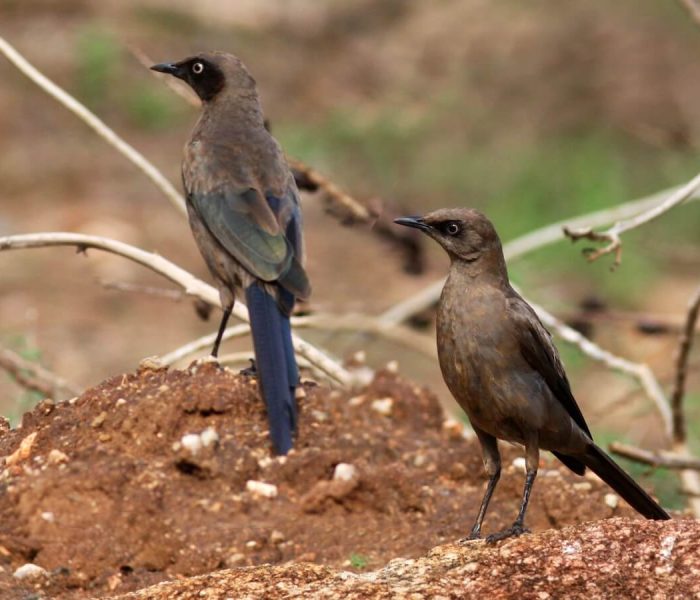
- Miombo Blue-eared Starling – often in large flocks in the canopy.
- Pale-billed Hornbill – arboreal, feeding on insects and small fruits.
- Böhm’s Flycatcher – skulking in dense miombo patches.
- White-breasted Cuckooshrike – forest edge species, often in small groups.
Mammal encounters include elephants, giraffes, sable antelopes, and lions, providing a dramatic forest-to-savannah transition experience.
Overnight: Tan Swiss Cottages | WiFi available
Day 9 – East Usambara Mountains
Travel to Amani Nature Reserve, part of the Eastern Arc Mountains, recognized for exceptional endemic biodiversity. Forest trails wind through high-canopy tropical forests, bamboo groves, and streams.
Overnight: Amani Rest House | WiFi available
Days 10 & 11 – East Usambara Forest Birding
Two full days exploring Amani Forest, targeting high-canopy endemics and understory specialists:
- Amani Sunbird – metallic-plumaged nectar feeder, active in flowering trees.
- Long-billed Tailorbird – constructs intricately sewn nests among leaves.
- Banded Green Sunbird – striking emerald plumage, feeds in upper canopy.
- Usambara Hyliota – forest edge specialist, often in mixed-species flocks.
Optional night walks reveal nocturnal species, amphibians, and forest mammals.
Overnight: Amani Rest House | WiFi available
Day 12 – West Usambara Mountains
Drive to the West Usambaras, a mosaic of highland forests, bamboo thickets, and cultivated lands. Elevation changes create microhabitats for rare species and seasonal migrants.
Overnight: Mullers Mountain Lodge | WiFi available
Day 13 – West Usambara Endemics
Birding highlights of the West Usambaras:
- Usambara Weaver – endemic weaver frequenting forest edges.
- Spot-throat – small, secretive forest understory species.
- Usambara Thrush – mid-elevation, often in dense foliage.
- Usambara Double-collared Sunbird – nectar feeder, bright male plumage.
Long-term isolation of these forests accounts for high endemism and specialization.
Overnight: Mullers Mountain Lodge | WiFi available
Day 14 – South Pare Mountains
Drive to South Pare, a dry, semi-arid highland ecosystem. Unique flora and woodland edges create habitats for dry-country specialists and highland endemics.
Overnight: Elephant Motel | WiFi available
Day 15 – South Pare Mountains Birding
Morning and afternoon hikes target:
- South Pare White-eye – small, fast-moving canopy flocks.
- Fülleborn’s Boubou – dry woodland and scrub specialist.
- Hunter’s Cisticola – grassland and rocky slopes.
- Dry-country raptors, larks, and sunbirds provide additional sightings.
Overnight: Elephant Motel | WiFi available
Day 16 – Arusha & Lark Plains
Transfer to Arusha, then to the Lark Plains, critical habitat for:
- Beesley’s Lark – critically endangered, restricted to northern Tanzanian plains.
- Fischer’s Sparrow-Lark – grassland specialist.
- Short-tailed Lark – arid, open plains.
- Brown Snake Eagle – hunting raptors often seen perched on termite mounds.
Overnight: Korona Villa | WiFi available
Day 17 – Tarangire National Park
Drive to Tarangire NP, known for elephant herds, baobabs, and dry-country endemics:
- Yellow-collared Lovebird – endemic to Tarangire and surrounding dry woodlands.
- Ashy Starling – mid-canopy insectivore.
- Northern White-crowned Shrike – savannah woodland edge.
- Red-and-yellow Barbet – brightly colored, often on fence posts or tree branches.
Savannah drives combine birding and large mammal photography, offering varied habitats within a single park.
Overnight: Country Lodge Karatu | WiFi available
Day 18 – Serengeti Plains
Journey into the Serengeti, Tanzania’s most iconic wildlife reserve. Birding highlights include:
- Grey-crested Helmetshrike – active in small groups.
- Rufous-tailed Weaver – open plains endemic.
- Fischer’s Lovebird – colorful, feeding in small flocks.
Savannah predators, herds of wildebeest, zebras, and abundant raptors provide unforgettable photography opportunities.
Overnight: Medium Tented Camp | WiFi available
Day 19 – Full Day Serengeti Birding
Explore multiple Serengeti habitats—woodlands, riverine areas, kopjes, and open plains. Endemic and near-endemic birds, bustards, coursers, larks, and raptors are plentiful. Wildlife viewing includes predators and migratory herds, offering a spectacular combination of birding and safari experiences.
Overnight: Medium Tented Camp | WiFi available
Day 20 – Return to Arusha & Departure
After a final morning birding session, drive back to Arusha. Depending on your flight schedule, you will be transferred to Kilimanjaro International Airport for your departure, concluding a comprehensive and unforgettable Tanzanian endemic birding expedition.
Book This Trip
- All national park entry fees & taxes
- All meals during safari (breakfast, lunch, dinner)
- Bottled drinking water (3+ liters per day)
- All accommodation during safari
- Transport in a custom 4×4 safari vehicle with pop-up roof
- Guaranteed window seat
- Professional safari guide
- Charging ports, radio communication, cooler box, filtered water
- Tips for guide & cook
- Flights (international or domestic)
- Tanzania visa fees
- Serengeti hot-air balloon ($480 per person)
- Items of personal nature
Price Per Person
OTHER RELATED BIRDING SAFARI